
Introduction
An RFQ for custom leather goods should do more than ask, “How much is this bag?” It should give the manufacturer enough information to select comparable materials, understand the construction, identify setup costs and quote the same commercial scope as competing suppliers.
Without a clear request for quotation, one factory may assume top-grain cowhide and custom packaging while another assumes a coated split leather and standard polybag. The lower figure may simply describe a different product. Clarifying the brief after quotation then creates revisions, delays and mistrust.
Quick answer: a useful leather-goods RFQ includes product drawings or references, dimensions, leather and finish direction, construction, lining, hardware, logo, packaging, estimated quantity, target market, required testing, sample expectations, delivery location and timing. It should also distinguish fixed requirements from areas where the manufacturer may recommend alternatives.
This guide shows importers, brand teams and distributors how to prepare a quote-ready brief for bags, wallets, passport holders, notebook covers, pen cases and other small leather goods.
Why Detailed RFQs Produce Better Decisions
A manufacturer calculates price from material consumption, usable cutting yield, component cost, labor steps, quality requirements, packaging and order volume. A product photo reveals only part of that information. It may not show lining construction, hidden reinforcement, leather thickness, pocket layers, edge finish or internal hardware.
A strong RFQ improves three decisions at once:
- Feasibility: can the design be made reliably in the requested material?
- Comparability: are all suppliers quoting the same scope?
- Planning: which details affect MOQ, sample work and delivery timing?
The goal is not to make every decision before contacting a factory. It is to show what is fixed, what is preferred and what remains open. That allows the product-development team to respond with focused questions instead of guessing.
The 12-Part Custom Leather Goods RFQ Checklist
1. Business and market context
State your company type, destination market and sales channel. A corporate-gift distributor, premium retail brand and marketplace seller may require different packaging, labeling, presentation and quality thresholds.
Useful details include:
- target country or region;
- intended customer and use case;
- retail, wholesale, gift or promotional channel;
- target launch window; and
- whether this is a pilot, seasonal order or repeat program.
You do not need to disclose confidential strategy. A short description helps the supplier evaluate materials and construction against real product application.
2. Product type and reference files
Name the product precisely: “zip-around A5 notebook cover” is more useful than “leather case.” Attach sketches, dimensioned drawings, a technical pack or photographs of a reference sample. Mark which features are inspiration and which must be reproduced.
If you send a physical sample, explain whether it is a dimensional reference, a workmanship target or both. Identify any feature that must not be copied because of third-party rights.
3. Dimensions and intended contents
Provide finished exterior dimensions and measurement points. Also state what must fit inside: laptop size, passport format, card standard, notebook dimensions, manicure tools or travel contents.
For flexible bags, explain whether dimensions are measured flat, standing or filled. Add tolerances only where you understand the functional consequence. Extremely tight tolerances on soft leather can increase rejection without improving customer experience.
4. Leather specification
“Genuine leather” is not a complete production specification. Describe:
- animal type where relevant;
- full-grain, corrected/top-grain, split or another construction as applicable;
- tanning or finish direction, such as waxed pull-up, smooth, pebbled or embossed;
- thickness range;
- temper or hand feel;
- color and gloss;
- acceptable natural variation; and
- required sourcing or documentation criteria.
Attach a physical swatch where color and hand feel are important. If you are open to options, ask for two clearly identified material routes with separate pricing. Do not ask a supplier to make unlike materials appear as one comparable quote.
5. Lining and internal construction
Specify lining material, color and weight, or request a recommendation based on the price position. Show pockets, dividers, card slots, pen loops and padding. Note whether seams should be bound, turned, painted or otherwise finished.
Small leather goods are especially sensitive to stacked thickness. Multiple card pockets, reinforcement and lining can create bulk. Ask the factory to flag areas where skiving or material changes are needed.
6. Hardware and closures
List zippers, sliders, snaps, magnets, buckles, hooks, feet and metal logos. Define finish color and, where applicable, size, supplier or performance requirement. For custom hardware, provide drawings or artwork and ask about mold ownership, setup cost, MOQ and plating approval.
Avoid vague terms such as “premium zipper.” If a named component is mandatory, state it. If an equivalent is acceptable, define the performance and appearance you need.
7. Logo and brand application
Provide vector artwork when possible. Specify size, location, color and preferred method: embossing, debossing, foil stamping, screen printing, laser marking, embroidery or metal branding may each suit different surfaces and quantities.
Ask the manufacturer to test the logo on the selected leather. Texture, wax content and finish can change edge clarity, foil adhesion and color. Approve a branded sample or strike-off before production.
8. Color assortment
List each product color and planned quantity. Color splitting matters because material and component suppliers may have their own minimums. A 300-piece order divided across six custom colors is not commercially equivalent to 300 pieces in one stocked color.
Define how colors will be approved and what should match: leather, edge paint, thread, lining, zipper tape, hardware and packaging may need coordinated—not necessarily identical—tones.
9. Packaging and labeling
Describe the unit pack and export pack. Include tissue, stuffing, hardware protection, dust bag, polybag, barcode, hangtag, care card, gift box, carton assortment and shipping marks.
Packaging affects quotation, MOQ, volumetric freight and shipment damage risk. If final packaging is undecided, ask the factory to quote a standard protective pack separately from optional branded packaging.
10. Quantity and order pattern
Give an estimated first-order quantity and realistic repeat potential. Break the quantity down by style and color. Ask the supplier to explain the MOQ driver: leather purchase, color dyeing, hardware, logo process, packaging or production setup.
It is reasonable to request price breaks, but use commercially meaningful tiers. A quote for 100, 300 and 1,000 units is useful only if those quantities are feasible for the chosen components.
11. Testing, inspection and destination requirements
State the destination market and any buyer-specific restricted-substance, performance, labeling or documentation requirements. Do not assume one generic test covers every country or product claim. Confirm the current applicable rules with qualified compliance professionals before ordering tests.
Define inspection expectations: approved sample reference, in-process checks, pre-shipment inspection, defect classification and any third-party inspection arrangement. If you expect a particular statistical sampling method, identify the applicable standard and version in the purchase agreement.
12. Sample, production and delivery terms
Ask the supplier to quote sample cost, number of revision rounds included, sample timing, bulk production timing after approval and the validity of the schedule. Material availability and custom components can change both MOQ and lead time.
Provide the delivery city, port or address and request the applicable Incoterm with the named place—for example, FOB at a named port or DDP to a named destination where offered. Do not compare an ex-factory price with a delivered price as if they were equivalent.
A Copy-and-Paste RFQ Template
Use the following structure in email or your sourcing system:
Project overview
- Company / brand:
- Destination market:
- Sales channel and use case:
- Target launch or delivery window:
Product
- Product type / working code:
- Reference files attached:
- Finished dimensions and measurement method:
- Intended contents or capacity:
- Key construction requirements:
Materials and components
- Leather type, finish, thickness, temper and color:
- Lining and reinforcement:
- Zippers, hardware and closure:
- Edge finish and thread:
- Approved or preferred material references:
Branding and packaging
- Logo method, size, position and artwork:
- Labels / barcode / care information:
- Unit packaging:
- Export carton and assortment:
Commercial request
- Quantity by style and color:
- Requested price tiers:
- Sample quantity and deadline:
- Required testing / inspection:
- Delivery term and named place:
- Questions or acceptable alternatives:
End by asking the supplier to list exclusions, assumptions, one-time charges, MOQ drivers and items still to be confirmed. This is more informative than requesting a single total.
How to Compare Supplier Quotations
Create a comparison sheet with one row per requirement. Check these categories:
| Quote area | Questions to resolve |
|---|---|
| Product scope | Is the quoted construction the same as the drawing or reference? |
| Leather | Is type, finish, thickness and color basis clearly identified? |
| Components | Are zipper, hardware, lining and reinforcement equivalent? |
| Branding | Are die, mold, artwork setup and application included? |
| Packaging | Is branded packaging included or quoted separately? |
| MOQ | Is it per style, color, component or total order? |
| Samples | How many samples/revisions and courier charges are included? |
| Unit price | Which quantity, currency and trade term apply? |
| Inspection | What factory checks are included, and who pays third-party inspection? |
| Timing | When does the clock start, and which approvals can change it? |
| Validity | How long are material price and schedule assumptions valid? |
If one quote is materially lower, isolate the reason. It may reflect a useful value-engineering idea—or a different assumption about leather, construction or service.
How to Request Value Engineering Without Losing Quality
Value engineering should protect the customer experience while reducing unnecessary cost. Tell the factory which features carry the brand promise and which can change.
Examples include:
- retaining exterior leather while simplifying an unseen pocket layer;
- using standard hardware where a custom mold adds no customer value;
- reducing color count for the pilot order;
- adapting an existing construction platform while keeping distinctive branding;
- changing packaging structure to reduce volume while preserving protection.
Ask for each proposal to state its effect on appearance, performance, MOQ, sample work and price. Approve the revised specification—not merely the saving.
Common RFQ Mistakes
Sending only a photograph
A photo does not establish size, materials or hidden construction. Add a measurement reference and list the features that matter.
Asking for “best quality”
Quality must be translated into material, workmanship and functional requirements. “Best” has no consistent inspection meaning.
Hiding the quantity
Factories need quantity to evaluate material purchasing and production setup. If the forecast is uncertain, provide a pilot quantity and two potential reorder tiers.
Requesting an unrealistically fixed delivery date
Separate sample approval, material procurement, production, inspection and transit. Ask which dates are estimates and which become commitments after approval.
Comparing prices without trade terms
A product price at the factory gate does not include the same scope as a price delivered to your warehouse. Always record the Incoterm and named place.
Leaving compliance until after sampling
Destination requirements can affect leather, coatings, hardware and testing. State them early and verify them with qualified specialists.
Why Send Your RFQ to Marrant?
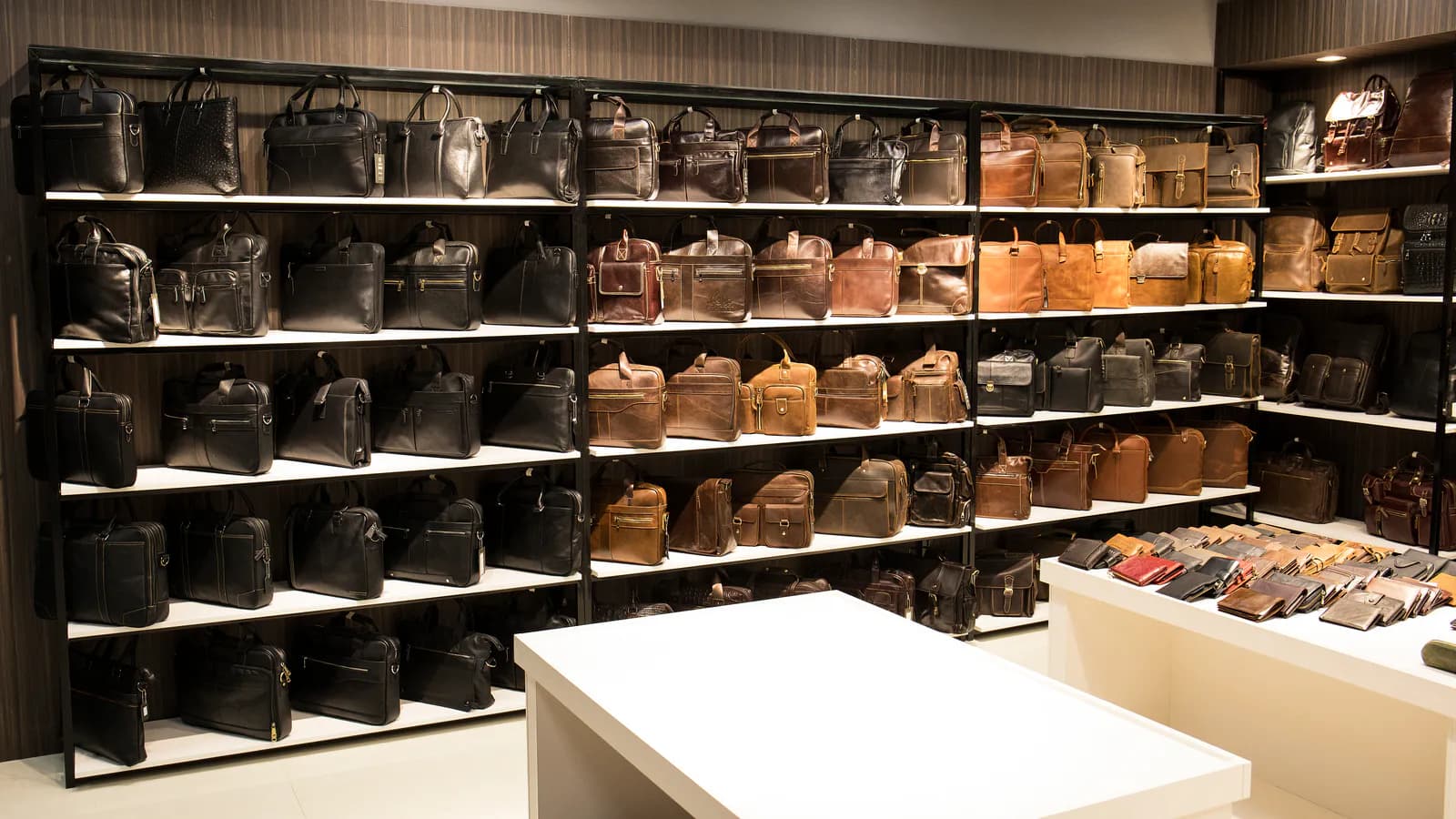
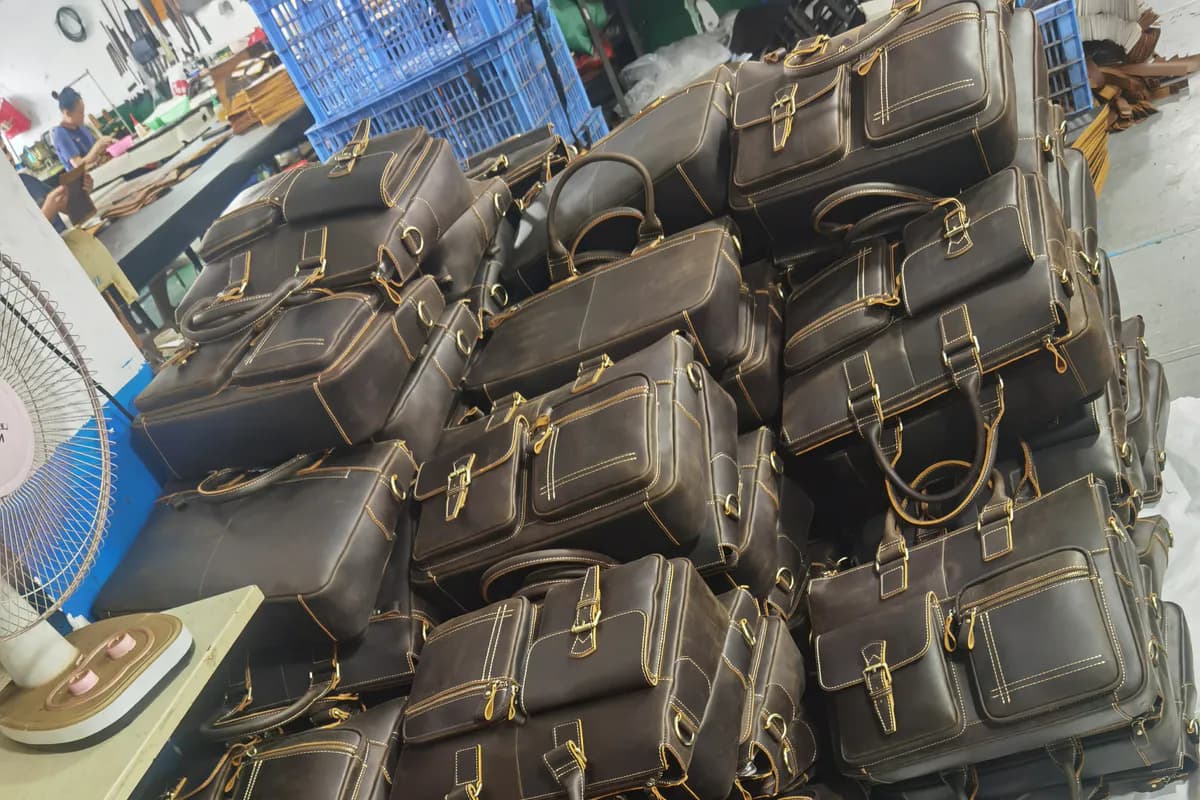
Marrant supports international buyers from product discussion and sampling through production checks and shipment preparation. The Guangzhou showroom and production workflow allow the team to compare your brief with real leather bag and small-leather-goods structures, identify missing decisions, and discuss practical alternatives for leather, hardware, logo application, internal layout and packaging.
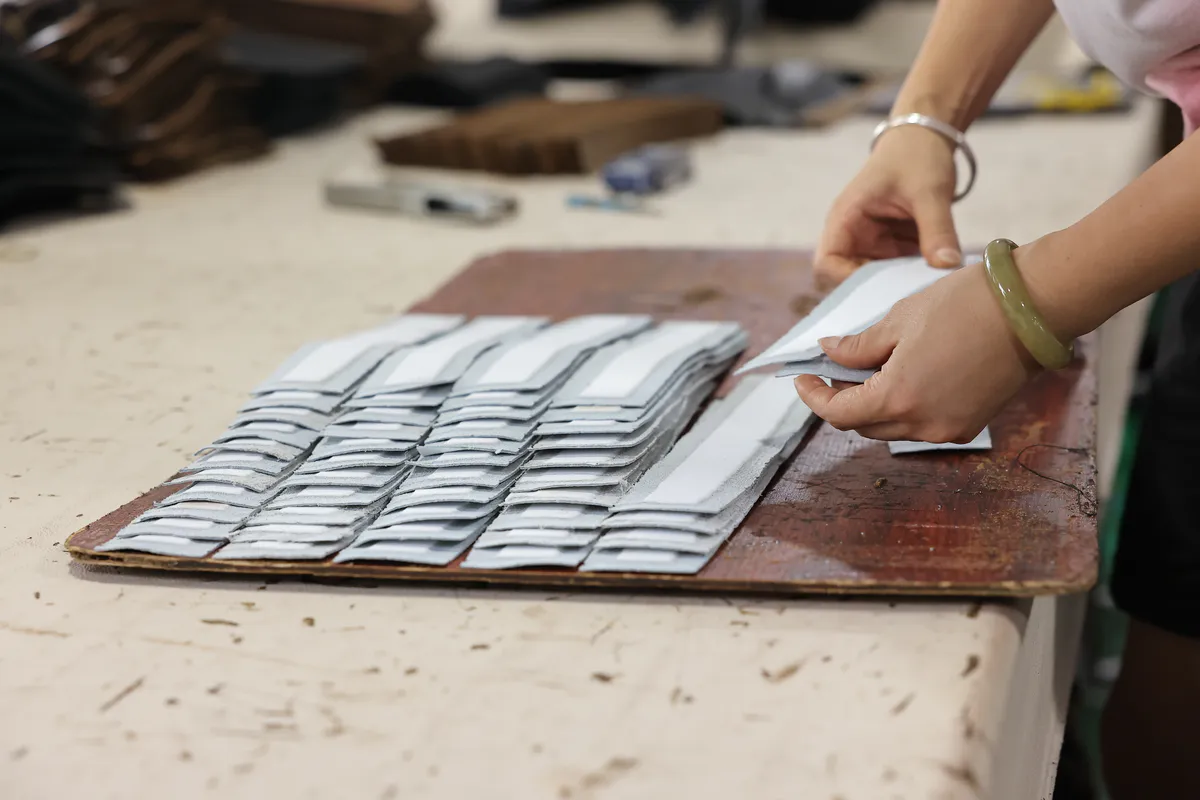
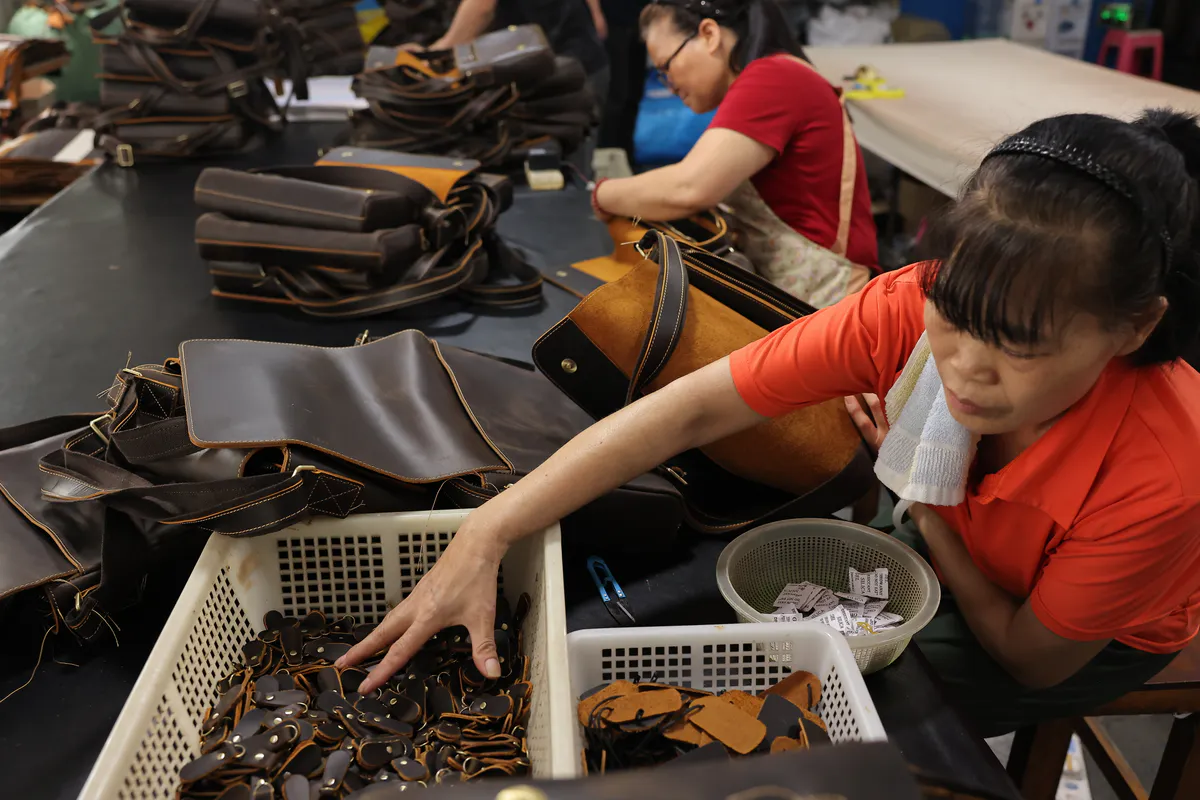
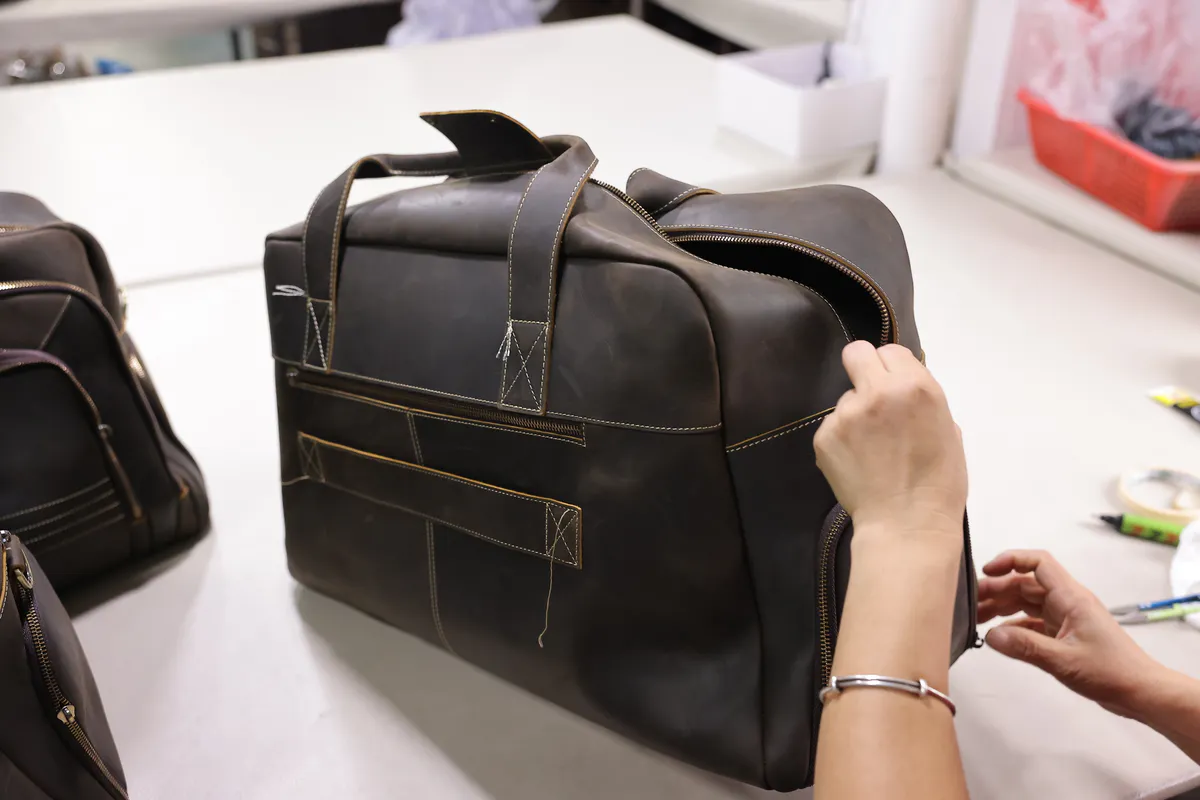
The advantage is not a one-size-fits-all quotation. Marrant confirms MOQ, sampling work and production timing after reviewing the actual material, color, branding, packaging and order requirements. This reduces the risk of receiving an attractive preliminary price that changes because important details were never included. Buyers can also review material preparation, cutting, stitching, assembly and quality checkpoints in person when arranging a factory visit.
FAQ
Q1. Can a manufacturer quote from a product photo?
A factory may provide a preliminary range, but an accurate production quote normally requires dimensions, material and construction assumptions. Treat a photo-based number as provisional and ask the supplier to list every assumption.
Q2. Do I need a complete technical pack?
Not necessarily. ODM and development-support projects can start with references and a clear requirement list. However, more unresolved details mean more quotation uncertainty and sampling work.
Q3. Why does MOQ change after customization?
Custom leather colors, plated hardware, logo processes and printed packaging may each have supplier minimums. The highest practical component or setup threshold can determine the finished-product MOQ.
Q4. Should I tell the factory my target price?
If it is realistic, a target range can guide material and construction recommendations. Pair it with non-negotiable requirements so cost reductions do not remove the product’s essential value.
Q5. How many sample revisions should I expect?
It depends on design maturity and complexity. Agree on what the first sample is intended to validate, how revisions are documented and whether additional rounds carry cost. Avoid assuming unlimited revisions.
Q6. What files are best for a custom logo?
Vector artwork is usually preferred for accurate scaling and tooling. Also provide size, position, color and a visual placement reference. The factory should confirm the appropriate production file for the selected logo process.
Q7. When is a quotation final?
A quotation becomes reliable when key materials, construction, quantity, branding, packaging, quality requirements and delivery terms are defined. It may still have a validity period because material and freight conditions change.
Conclusion
A good custom leather goods RFQ is a decision tool, not paperwork for its own sake. It gives the manufacturer enough context to ask better questions, exposes MOQ and cost drivers, and lets the buyer compare like with like.
Start with the product’s use, specify what customers will see and touch, document hidden construction where it affects performance, and state the commercial and inspection scope. Where details are open, invite clearly labeled alternatives. That balance produces a faster, more credible quotation and a stronger foundation for sample approval.