
Introduction
Choosing between OEM, ODM and private-label manufacturing is one of the first decisions in a leather-goods project. It affects how much design control you retain, how many development rounds you may need, which costs appear before production and how quickly a product can reach the market.
The terms are often used loosely. A supplier may call a modified catalogue item “OEM,” while a buyer may use “private label” for anything carrying its logo. The label matters less than the actual scope of work. Before paying for a sample, both sides should agree on who owns the design, which parts are being changed, what becomes the approval standard and what is included in the quotation.
Quick answer: choose OEM when you have a defined product specification and need a factory to manufacture it; choose ODM when you want to adapt a manufacturer-developed design; choose private label when speed and low development complexity matter more than exclusivity. Many real projects combine these models—for example, an ODM bag structure with OEM hardware, lining and packaging.
This guide explains the practical differences for importers, distributors, product developers and e-commerce brands sourcing leather bags, wallets and small leather goods.
What Do OEM, ODM and Private Label Mean in Leather Goods?
OEM: your specification, manufactured by the supplier
OEM, or original equipment manufacturing, normally starts with a buyer-controlled brief. That brief may include drawings, dimensions, materials, construction details, logo artwork, packaging and performance requirements. The factory evaluates manufacturability, develops patterns and samples, then produces against the approved standard.
OEM offers the greatest design control, but it also demands the clearest inputs. A sketch alone is rarely a complete production brief. A leather tote, for example, also needs decisions about leather temper and thickness, reinforcement at handle bases, zipper specification, lining construction, edge finishing, stitch color, logo method and carton packing.
OEM is usually appropriate when:
- the silhouette or internal layout is proprietary;
- exact dimensions and construction are important;
- the brand has an established visual language;
- components must meet market-specific requirements; or
- the product will be repeated across seasons.
The main risk is uncontrolled development. If comments arrive in separate messages, materials change after the sample is approved or the “final” sample is not clearly identified, cost and timing can drift.
ODM: a supplier-developed base adapted to your market
ODM, or original design manufacturing, begins with an existing factory design or construction platform. The buyer selects a base and requests changes such as leather color, handle length, pocket layout, hardware finish, logo application or packaging.
ODM can reduce pattern-development time because the core construction has already been made. It is useful when a buyer understands the target customer but does not need a completely original structure. However, “existing design” does not mean “production ready” for every material. Changing a soft leather bag to a firmer cowhide, for instance, may alter seam bulk, edge behavior and the way the bag closes. A revised sample is still necessary.
Ask whether the base design is offered to other buyers and whether any requested feature can be reserved for your market. Exclusivity should be written, defined by territory, product and duration, and priced realistically.
Private label: an existing product presented under your brand
Private-label leather goods typically use an established product with limited changes. The brand may select from existing colors, add a logo and choose packaging. It is often the fastest route for testing a category, building a corporate-gift program or launching a small collection without funding extensive development.
Private label is not automatically low quality. Quality depends on the approved materials, construction, inspection criteria and production control. Its limitation is differentiation. If competitors can buy the same design, the brand must create distinction through material selection, color, packaging, merchandising or service.
OEM vs ODM vs Private Label: Side-by-Side Comparison
| Decision factor | OEM | ODM | Private label |
|---|---|---|---|
| Starting point | Buyer specification | Manufacturer design | Existing product/SKU |
| Design control | High | Medium | Low to medium |
| Development work | Highest | Moderate | Lowest |
| Sampling need | Multiple rounds may be required | Usually at least one revised sample | Logo/packaging or confirmation sample |
| Speed to market | Usually longest | Medium | Usually shortest |
| Upfront cost | Pattern, sample, molds or tooling may apply | Adaptation and sampling costs may apply | Mainly sample, branding and packaging setup |
| Differentiation | Highest potential | Moderate to high | Limited unless presentation is distinctive |
| Best fit | Established brief or unique product | Faster development with controlled changes | Market test, gifts or straightforward launch |
These are working patterns, not universal promises. MOQ and lead time depend on the actual leather, color, hardware, logo process, packaging and production schedule—not only on the manufacturing label.
How the Manufacturing Model Changes Cost and MOQ
Buyers often ask which model has the lowest MOQ. The more useful question is: which requirement creates the MOQ?
Leather availability may set one threshold, while a custom-dyed lining, plated hardware or printed gift box sets another. A factory may be able to cut 100 wallets, but the selected zipper supplier may require a larger component order. Conversely, an in-stock leather and standard hardware combination can make a small pilot run more practical.
Typical cost drivers include:
- new pattern development and grading;
- prototype labor and revision rounds;
- custom leather color or finish;
- hardware molds, plating and engraving;
- logo dies, screens or foil setup;
- packaging tooling and print quantity;
- material testing or destination-market documentation;
- final inspection and shipment preparation.
Request a quotation that separates one-time development charges from unit price. This makes repeat-order economics easier to understand and prevents tooling costs from being hidden inside an unexplained product price.
How Sampling Should Work for Each Model
OEM sampling: approve in gates
An OEM project benefits from three decision gates. The first prototype checks proportion and construction. A revised sample closes design comments. A pre-production sample—or another clearly documented production reference—confirms materials, colors, logo, workmanship and packaging before bulk work begins.
Not every project needs three physical samples, but every project needs the same decisions closed. Record changes in one revision list. Mark each item approved, rejected or pending. Photographs help communication, but physical leather color and hand feel may still require a swatch or sample review under consistent lighting.
ODM sampling: test the changes, not only the base
With ODM, focus inspection on the modified areas. A longer strap changes leverage at the anchor. A thicker leather changes folds and seam bulk. A new zipper may change the opening. A foil logo that looks clean on smooth leather may behave differently on a textured surface.
The factory should still conduct practical checks: dimensions, loaded closure, pocket access, zipper operation, strap attachment, surface appearance and packaging fit.
Private-label sampling: verify what the logo changes
Private-label projects can appear simple, but branding can introduce defects. Check logo position, size, color, depth and resistance to ordinary handling. Confirm that labels do not interfere with pockets or seams and that the branded packaging protects the product during shipment.
What Buyers Should Put in the Manufacturing Agreement
A useful purchase document connects commercial terms to a physical and written standard. Include:
- product code and revision number;
- approved sample identification and date;
- bill of materials or agreed material references;
- dimensions and tolerances where function depends on them;
- color and logo standards;
- packaging, carton marks and labeling;
- inspection method and defect classification;
- production and shipment milestones;
- ownership of buyer artwork, tooling and custom patterns; and
- change-control procedure.
Avoid relying on phrases such as “same as sample” when more than one sample exists. Identify the exact reference and keep an approved duplicate or sealed record where practical.
Why Buyers Work with Marrant
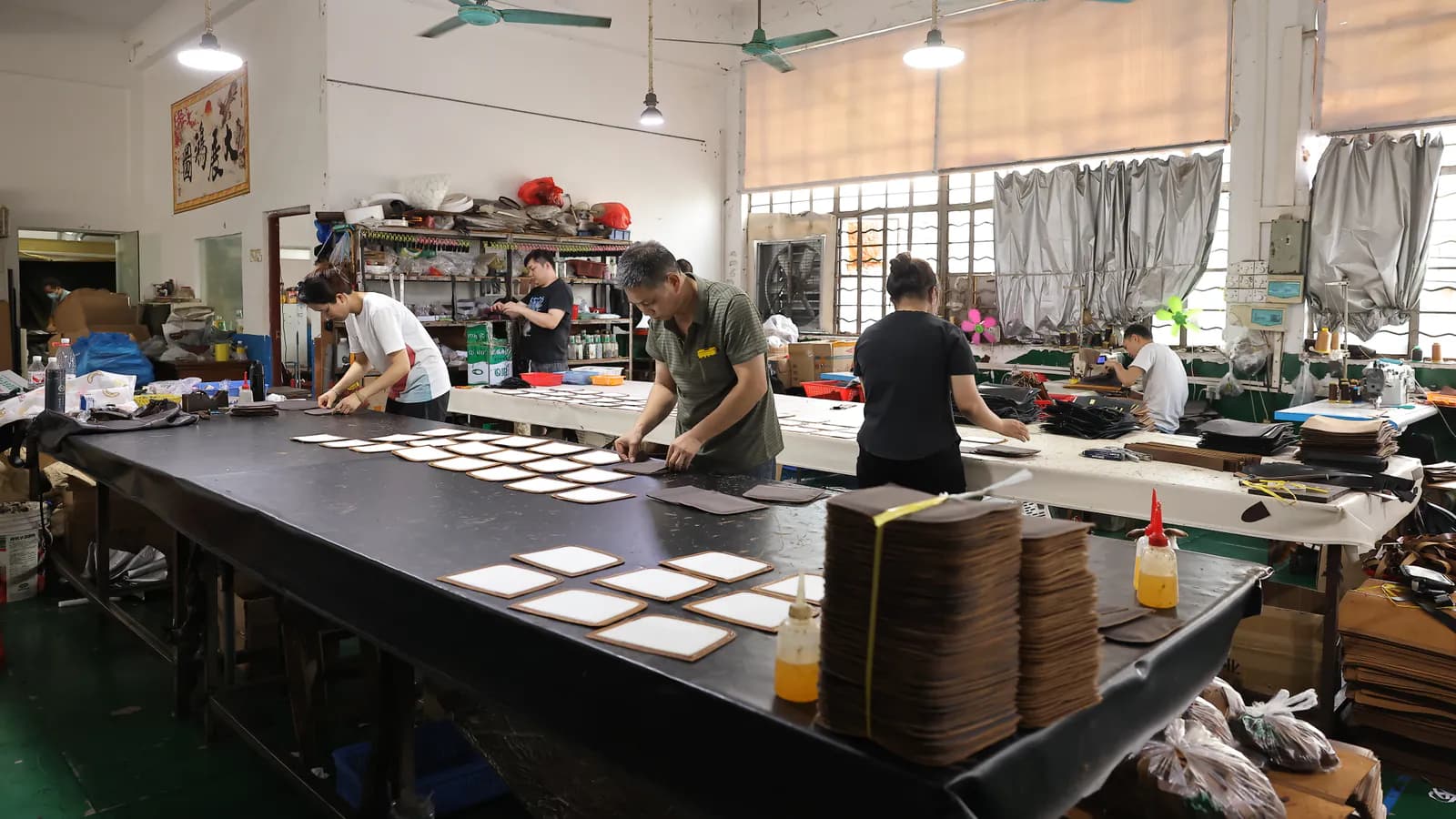
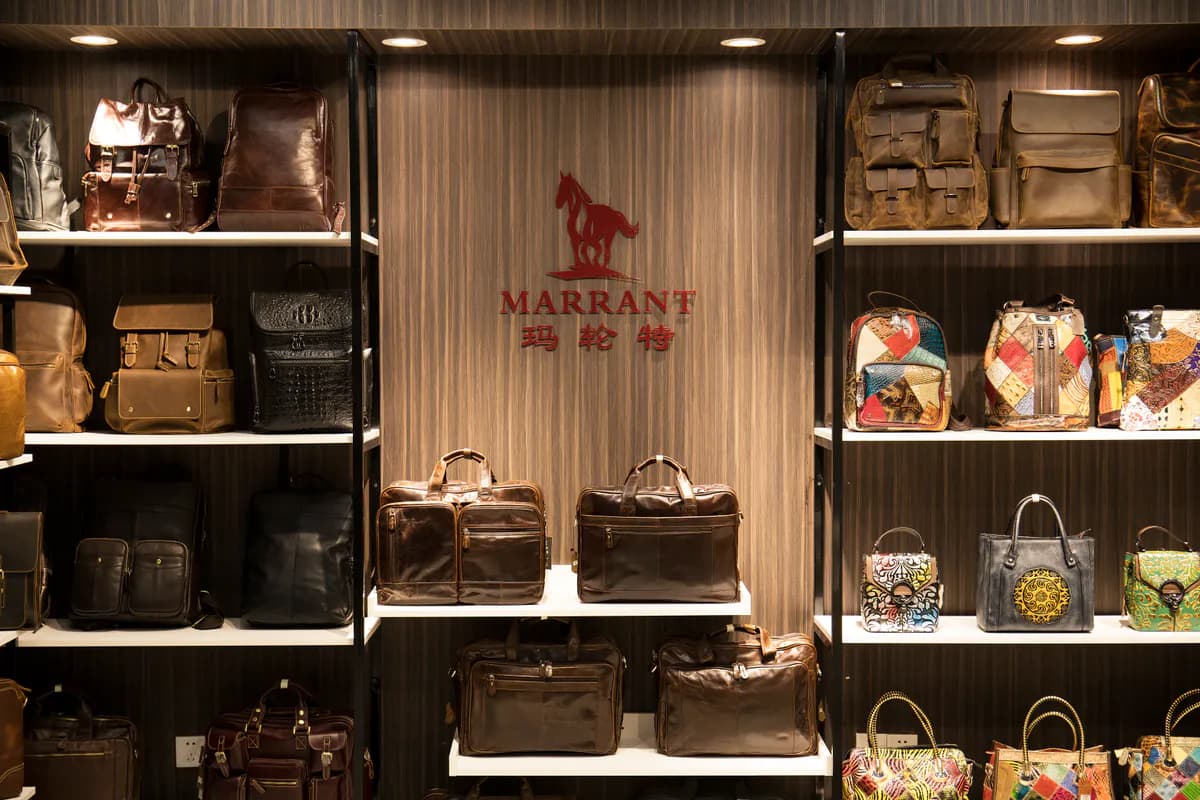
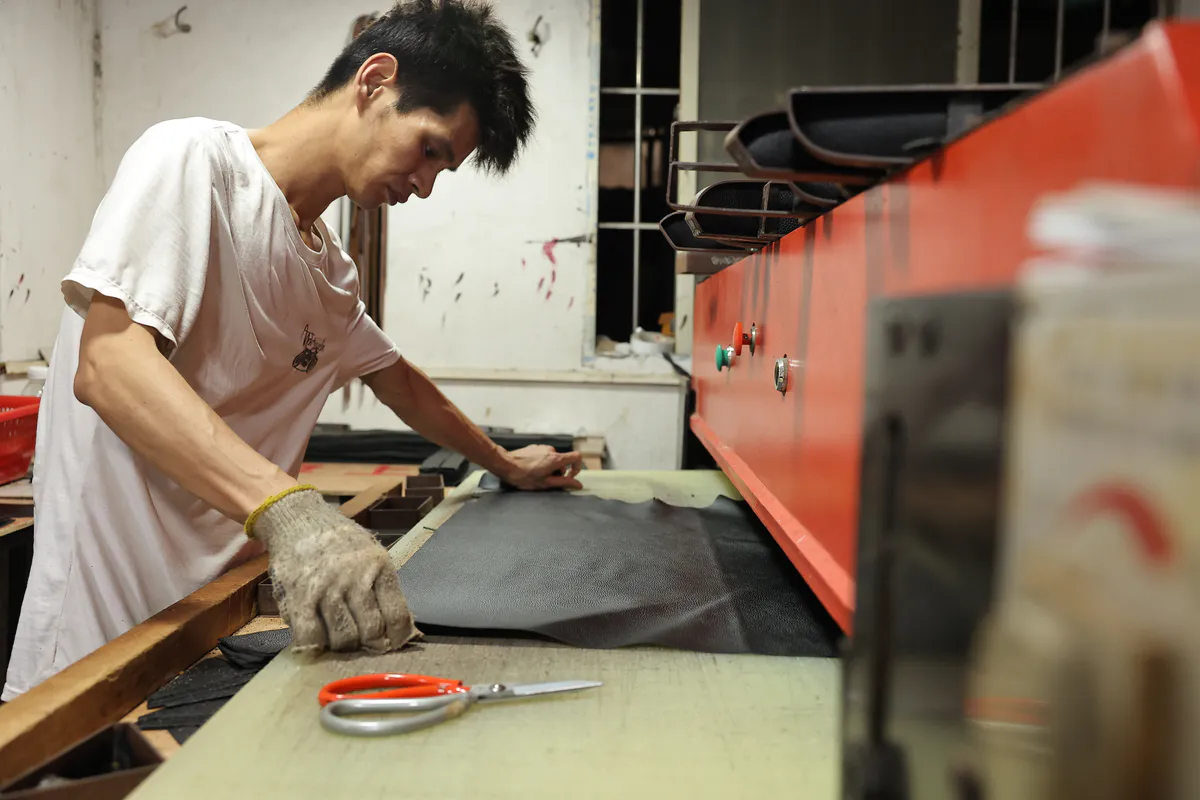
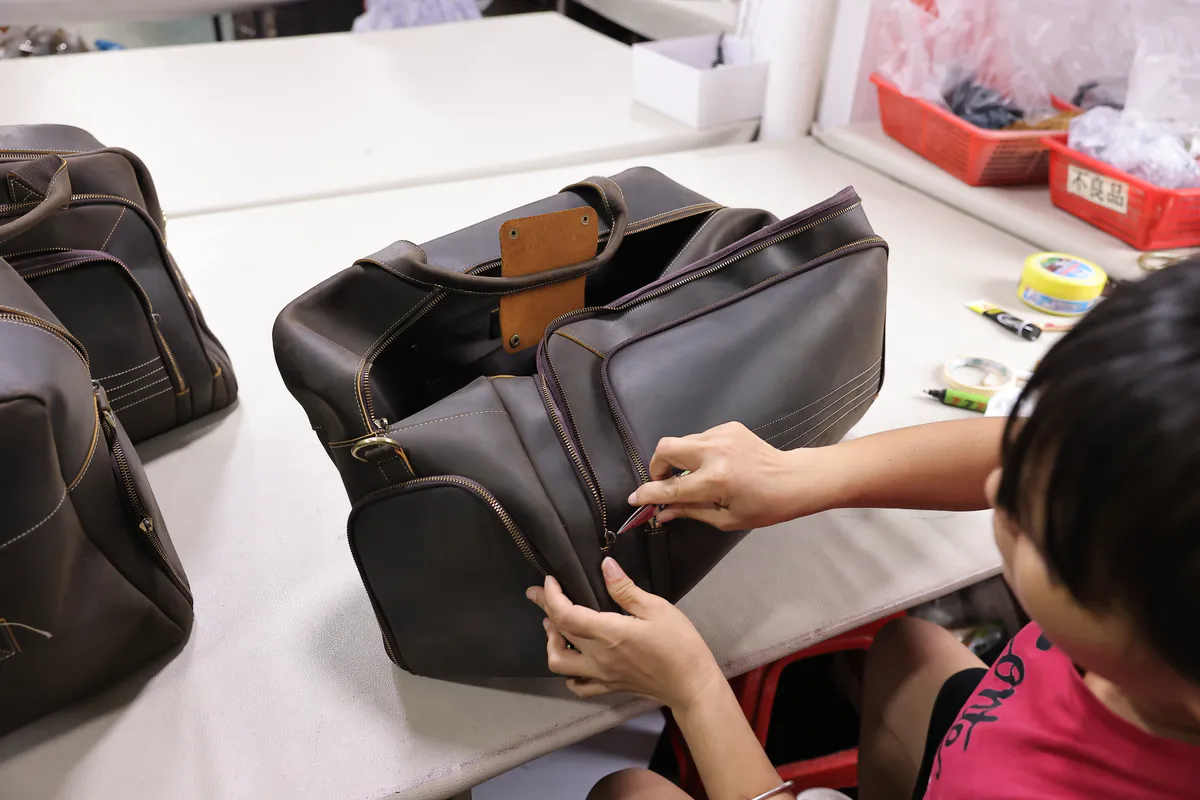
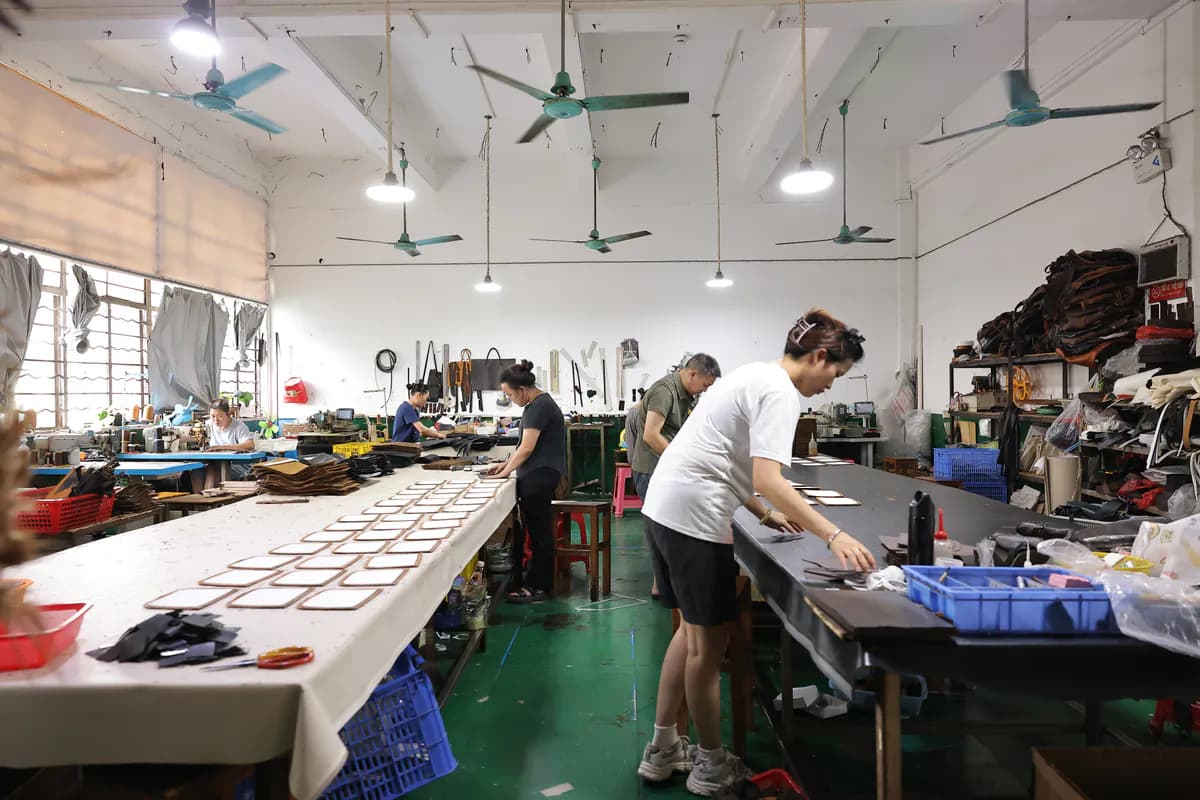
Marrant combines product-development support with a visible Guangzhou production workflow. Buyers can review existing leather bag and small-leather-goods structures, discuss OEM/ODM changes with the team, and confirm requirements through samples before bulk production. Quality checks are built around practical stages—including material review before cutting, cutting accuracy, stitching and structure, hardware, finished-product appearance and packing—rather than being left only to the final day.
This does not remove the buyer’s responsibility to approve materials, specifications and commercial terms. It does make the project easier to evaluate: requirements can be discussed against real products, the production process is open to buyer review, and MOQ and timing are confirmed against the actual customization brief instead of being presented as one fixed promise for every order.
A Practical Decision Framework
Choose OEM when uniqueness creates value
OEM makes sense when the product’s structure, performance or brand details support the retail proposition. It is also the better route when your organization already has a technical pack and can make timely decisions during development.
Choose ODM when the market brief is clear but the construction is flexible
ODM works well for buyers who know the use case—such as a travel organizer, notebook cover or commuter tote—but want to start from proven construction. Define which elements must be unique and which can remain standard.
Choose private label when learning speed matters
Private label can validate demand before a larger OEM investment. Plan the pilot deliberately: limit the variables, measure returns and customer feedback, then decide which features deserve custom development in the next order.
Common Project Mistakes—and How to Prevent Them
Choosing only by the lowest unit quote
Two quotes may include different leather, edge finishing, reinforcement, packaging or inspection. Compare line by line. If a price difference cannot be explained, ask which assumption changed.
Treating the first sample as the bulk standard
An early prototype may use substitute materials to validate structure. Before production, confirm which leather, hardware, lining, logo and packing references control the order.
Adding customization after price approval
A new logo method, custom color or gift box can change MOQ, scrap, labor and schedule. Freeze key requirements before confirming the production price.
Ignoring shipment inspection
Sample approval confirms a reference unit; it does not prove that a complete lot matches it. Plan in-process checks and a final shipment inspection appropriate to the order risk.
FAQ
Q1. Is OEM always more expensive than ODM?
Not always. OEM usually has more development cost, but the final unit price is driven by materials, construction complexity, order quantity and packaging. A heavily modified ODM product can cost more than a simple OEM design.
Q2. Can I use an ODM design and still add my own logo?
Yes, if the supplier offers that option. Confirm available logo methods, placement, setup cost, MOQ and whether the base design is shared with other buyers.
Q3. Which model is best for a new leather-goods brand?
For a first market test, private label or lightly modified ODM may reduce development risk. If a unique feature is central to the brand promise, a focused OEM project may be worth the additional sampling work.
Q4. Who owns the pattern or mold?
Ownership depends on the written agreement and who funded the development. Do not assume. State ownership, storage, maintenance and permitted use before paying tooling charges.
Q5. Do I still need a pre-shipment inspection for private-label goods?
Yes, when order value or brand risk justifies it. Existing products can still have color variation, stitching defects, hardware issues, incorrect logos or packing errors.
Q6. What information should I send for an accurate quotation?
Send product type, drawings or references, dimensions, leather direction, lining, hardware, logo, packaging, target quantity, destination market and required delivery window. Identify which details are fixed and which are open to factory recommendations.
Conclusion
OEM, ODM and private label are not quality grades. They are different ways to divide design responsibility and development work. The right choice is the model that matches your need for uniqueness, your available specification, your launch schedule and your tolerance for sampling complexity.
Whichever route you choose, protect the outcome with a clear brief, controlled sample approval, written material references and inspection before shipment. Those controls matter more than the acronym on the quotation.